Stories
From the meeting at PwC Tower in Milan ahead of Salone Contract 2027, the new directions for the residential development sector according to the SDA Bocconi Senior Fellow and CityLife Senior Advisor


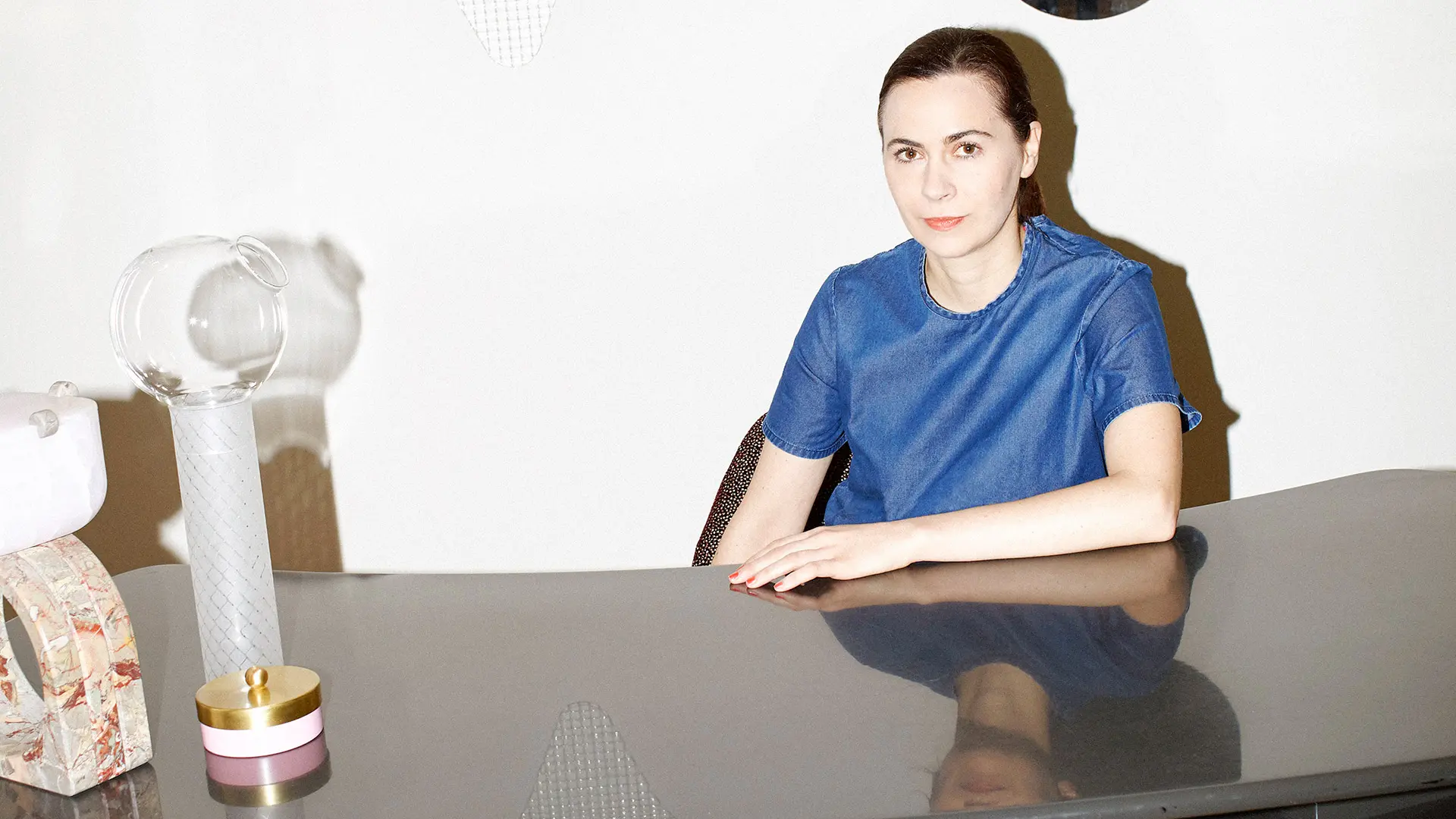
Cristina Celestino, designer - Ph. Simon171
From products to interiors, the Italian designer beckons us into a world in which memory, rigour disguised as softness, and an ability to listen that becomes the premise of projects calibrated to the context, are intertwined
After graduating in architecture, she made her debut at SaloneSatellite and hasn’t stopped since. Cristina Celestino is as active in the field of product design as she is in that of interiors, and is one of the most best-known faces in contemporary Italian design. Her gift for rereading past atmospheres and contexts is perhaps her most recognisable trait. Less immediate, but nevertheless equally significant is her pursuit of a coherence between geometries, comfortable forms and ecological detail. In her furnishings, decoration is never superfluous, rather an integral part of the user experience and of the setting. In this interview, Celestino talks comprehensively about her design practice, ranging from her sources of inspiration to developments in the contract sector, as well as gender issues in design and advice for young hopefuls preparing for the next edition of the Salone.
When we visit a historic space - I’m thinking of the interior of a vintage café or a historic residence, not necessarily the work of the great masters - what I feel is a profound satisfaction of the senses, a richness of sensations. It’s the layers of past time and design concepts, within contexts already possessed of a fundamental architectural value, that creates this magic. In my projects, I try to ‘cheat time’. I play with history as if it were an abacus of references, allowing myself to be guided by the context of the building and the stimuli of the landscape to build my own alphabet of signs and my colour palette. In this way, memory is transformed, almost naturally, into a contemporary language. I measure out details and accents with the utmost care, because I want the whole to be harmonious and never garish. The aim is to imbue spaces with an atmosphere of fullness, harmony and serenity, whilst leaving subtle clues that speak of modernity, design and the unexpected. The same applies to product design: it is a more focused creative process, which keeps every detail under control – a dialogue with fewer participants – but which stems from the same design premises and the same approach to research.
Geometry is fundamental to me, perhaps precisely because of my training as an architect. Suffice it to say that in interior design projects I am rigorous, almost obsessive, when it comes to alignments, symmetries and scale relationships, even if this rigour remains hidden, invisible in the final result. When I turn my hand to furniture design, it may seem as though my work vacillates between extremes, with pieces such as the Gala sofa or the Peonia armchair that appear to be shaped entirely by curves, and others like the Seeds coffee tables for Ethimo, which arise from a strict framework and take geometry as their foundation. It is never a purely aesthetic choice, rather a search for meaning. The lines that map out the forms only emerge once I have found the right story to tell, the archetype to revisit or the function to explore. This is why ‘rounding off the corners’ is not a formal exercise, but the reflection of a world of references that becomes a design. Certainly, my aesthetic vision and my design approach materialise in a soft, welcoming and harmonious universe, capable of translating invisible rigour into domestic inclusivity.
Yes, contact with nature is fundamental to me. It always has been, but this need seems to be growing as the years go by. Tending to plants has an almost therapeutic effect and brings deep satisfaction: every action connected to the ground embodies a sense of long-term planning, with a wonderfully long time horizon not governed by human will alone.
This connection is deeply rooted in my own life story and in the countryside where I grew up. That is why the natural world instinctively becomes part of my repertoire of symbols, colours and inspirations. The process leading from the natural reference to the final object is a spontaneous abstraction: I retain the essence or the suggestion of a form, a geometry or a texture, which is then enriched and progressively abstracted through the superimposition of other stimuli and guided by my own personal aesthetic sense.
Over the last few years, we have been witnessing a profound blurring of boundaries between spaces. The line between the home, hospitality and retail has become extremely fluid: hotels seek the intimate warmth of a domestic setting, homes are equipped with standards and facilities typical of hotel accommodation, and retail is turning into a place of experience and emotional connection.
Clients are becoming increasingly demanding, constantly torn between a desire for materiality and authenticity and a need for industrial perfection. There is a strong demand for genuine materials capable of ageing well, combined with a deep quest for a comfort I would describe as sensory: natural light and physical and mental wellbeing are now just as much a priority as looks. The design process is becoming increasingly complex, and an ever-growing number of professionals are involved. Within this framework, the Salone del Mobile remains an indispensable event. Far from being a purely commercial product showcase, it has evolved into an ecosystem of thought and an incubator of ideas, increasingly interwoven with the broader theme of design. It is the place where the visions of all the industry stakeholders converge – from designers to the manufacturing excellence of companies and the expertise of international professionals. This synergy turns the trade fair into a crucial moment of synthesis, no longer focused solely on the product - but also on the network of services and professionals surrounding design - capable of decoding the complexity of the sector and showcasing the future of design, whilst seeking to portray the present in all its different nuances.
I don’t believe there is such a thing as a ‘masculine’ or a ‘feminine’ design; rather, there are different sensibilities in approaching a project. In my experience, women tend to place great importance on the listening and dialogue stage, showing strong empathy and deep respect for the diversity of the stakeholders involved in the process. So, rather than a shared aesthetic code, I would describe it as a predisposition to listen: a shared approach that then leaves room for the most diverse design outcomes, guided by the individuality of each creative person.
I remember my debut at SaloneSatellite as a time of extraordinary community spirit and, also, as a real springboard. From one day to the next, you find yourself showcasing your work to a global audience: it’s a concentrated preview, condensed into just a few days, of what the reality of the profession will eventually turn out to be. The advice I’d give to young designers wishing to exhibit at SaloneSatellite is not to rush into it: wait until you feel you’ve reached a certain level of design maturity, so that you can make the most of an opportunity of this level. It’s essential to present yourself with a clearly defined design language and a visible consistency in the work you exhibit – a maturity born of study and research. You need to be prepared not only in terms of the design itself, but also in terms of communication and self-promotion. Satellite is the first real test of a complex and wonderfully multifaceted profession.




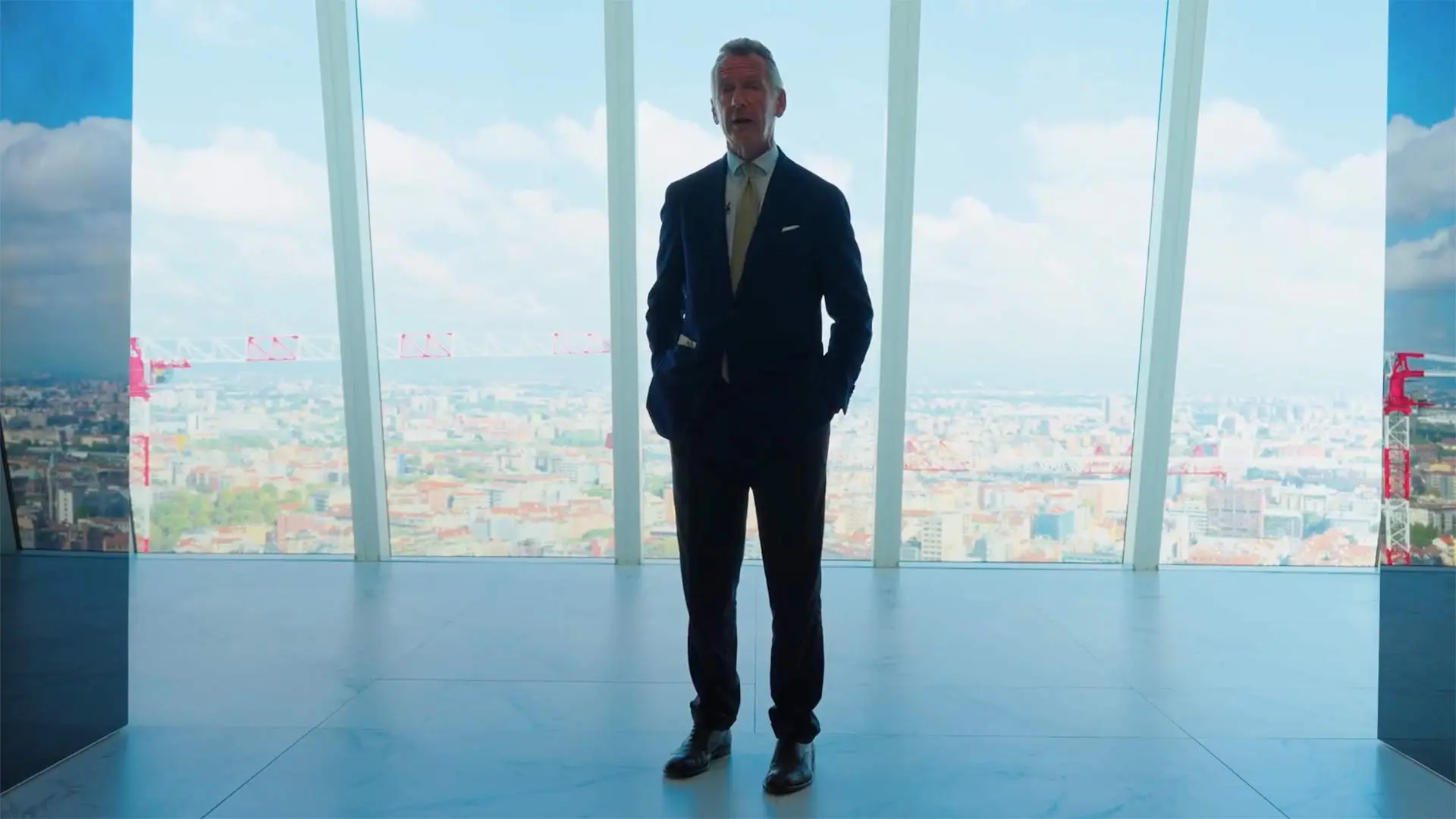
From the meeting at PwC Tower in Milan ahead of Salone Contract 2027, the new directions for the residential development sector according to the SDA Bocconi Senior Fellow and CityLife Senior Advisor