
Contributor

Filters

Filters Filters
Sort order Order by
Carsten Höller
Carsten Höller applies his training as a scientist to his work as an artist, concentrating particularly on the nature of human relationships. Major installations include Flying Machine (1996), an interactive work in which viewers are strapped into a harness and hoisted through the air; Test Site (2006), a series of giant slides installed in Tate Modern’s Turbine Hall; Amusement Park (2006), a large installation at MASS MoCA of full-sized carnival midway rides operating at dramatically slowed speeds; The Double Club (2008–09), a work designed to create a dialogue between Congolese and Western culture in the form of a London bar, restaurant, and nightclub; and Upside-Down Goggles (2009–11), an ongoing participatory experiment with vision distortion through goggles. Höller’s Revolving Hotel Room, an installation that became a fully operational hotel room by night, was featured in the exhibition theanyspacewhatever at the Guggenheim Museum, New York (2008–09).  Höller was born in 1961 in Brussels to German parents. Major exhibitions and solo presentations include the 50th Biennale di Venezia, Venice (2003); One Day One Day, Färgfabriken, Stockholm (2003); 7th Biennale de Lyon, France (2003); Half Fiction, Institute of Contemporary Art, Boston (2003); 7,8 Hz, Le Consortium, Dijon, France (2004); Une exposition à Marseille, Musée d’Art Contemporain, Marseille (2004); 51st Biennale di Venezia, Venice (2005);Test Site, Tate Modern, London (2006); Amusement Park, MASS MoCA, North Adams, Massachusetts (2006); Carrousel, Kunsthaus Bregenz, Austria (2008); The Double Club, Fondazione Prada, London (2008); 28th Bienal de São Paulo (2008); Double Slide, Museum of Contemporary Art, Zagreb (2009); 53rd Biennale di Venezia, Venice (2009); 8th Gwangju Biennale, South Korea (2010); Divided Divided, Museum Boijmans Van Beuningen, Rotterdam, Netherlands (2010); Soma, Hamburger Bahnhof, Berlin (2010); Double Carousel with Zöllner Stripes, Museo d’Arte Contemporanea, Rome (2011); Experience, New Museum, New York (2011); 11th Sharjah Biennial, United Arab Emirates (2013); LEBEN, Thyssen-Bornemisza Art Contemporary, Vienna (2014); 8th Berlin Biennale (2014); 10th Gwangju Biennale, South Korea (2014); Golden Mirror Carousel, National Gallery of Victoria, Melbourne, Australia (2014–15); 56th Biennale di Venezia, Venice (2015);Decision, Hayward Gallery, London (2015); Doubt, Pirelli Hangar Bicocca, Milan, Italy (2016); Video Retrospective with Two Light Machines, Mu.ZEE, Ostend, Belgium (2016); Y, Centro Botín, Santander, Spain (2017); and Sunday, Museo Tamayo, Mexico City (2019). The Slide at the ArcelorMittal Orbit (2016), Höller’s commissioned addition to Anish Kapoor’s ArcelorMittal Orbit (2012), is permanently installed at Queen Elizabeth Olympic Park, London; and his site-specific Aventura Slide Tower (2018) can be experienced at the Aventura Mall, Florida. Höller’s memorial to Hans Künzi, Denkmal für Hans Künzi, (2017) is installed at SBB CFF FFS, Zürich, Switzerland, whilst Decimal Clock (White and White), (2018) at Centrale Supeléc.is one of his largest light works to date. DAC Slide, (2020) another site specific public slide for the Dansk Arkitektur Center (DAC), in Copenhagen, Denmark, was most recently unveiled in 2020. Höller lives and works in Stockholm and Biriwa, Ghana.

Bjarke Ingels
Architect, Founder Bjarke Ingels GroupBjarke believes the architectural profession is best explained with the traditional Danish word for design: Formgivning. As the name suggests it literally means form giving. When you design something, you give form to that which has not yet been given form – you are shaping the future. When you design a space, a building or a city, you are giving form to the world you yourself would want to living in.Named one of Time Magazine’s 100 Most Influential People in the World, Bjarke is known for groundbreaking projects that push the boundaries of architecture and urbanism. His recent work includes the Prague Philharmonic, The Chinese National Natural History Museum in Beijing, Zurich Airport, The Woven City in Japan, and Gelephu Mindfulness City in Bhutan. He is also collaborating with NASA and ICON Technologies to design the first permanent human habitat on the Moon.His contributions to architecture and culture have earned him numerous accolades. Bjarke is a Knight of the French Order of Arts et des Lettres and a Knight of the Danish Order of Dannebrog. He was appointed to the EU’s New European Bauhaus High-Level Roundtable in 2021 and, since 2023, has served as an advisor to the King of Bhutan. He is an Honorary Fellow of the AIA, RIBA, and RAIC. His awards include the Venice Biennale’s Golden Lion, The French Academy of Architecture’s Gold Medal, the Aga Khan Award, and the Louis I. Kahn Memorial Award. In 2011, The Wall Street Journal named him Innovator of the Year, the same year he received the Danish Crown Prince Couple’s Culture Prize.Bjarke is also an esteemed educator, having taught at Harvard, Yale, Columbia, and Rice Universities. He holds an honorary professorship at the Royal Academy of Arts, School of Architecture in Copenhagen. His thought leadership has taken him to 10 Downing Street, the Danish Parliament, and the World Economic Forum, where he has spoken about architecture’s role in shaping a sustainable and innovative future.  Ph. REFORM Sofie Mathiassen
Timothy Ingold
Timothy Ingold is Professor Emeritus of Social Anthropology at the University of Aberdeen. He has carried out fieldwork among Saami and Finnish people in Lapland, and has written on environment, technology, and social organization in the circumpolar North, on animals in human society, and on human ecology and evolutionary theory. His more recent work explores environmental perception and skilled practice. Ingold’s current interests lie on the interface between anthropology, archaeology, art, and architecture. His books include The Perception of the Environment (2000), Lines (2007), Being Alive (2011), Making (2013), The Life of Lines (2015), Anthropology and/as Education (2018), Anthropology: Why it Matters (2018), Correspondences (2020), Imagining for Real (2022) and The Rise and Fall of Generation Now (2024). Ingold is a Fellow of the British Academy and of the Royal Society of Edinburgh. In 2022 he was made a CBE for services to anthropology.   Ph. Joséphine Michel
Random International
Established in 2005, Random International is a post digital art group exploring the impact of technological development on the human condition. Best known for their large-scale interactive installations, the group works across an array of media including sculpture, light, kinetics, video, print, and sound. Led by founders Hannes Koch (b.1975, Germany) and Florian Ortkrass (b.1975, Germany), the group has a studio in London and comprises a global team of complementary talent. Experimental by nature, Random International’s practice is fuelled by research and scientific discovery. The group channels irrepressible collective energy—mediated via the machine—into acts of public co-creation, which invite subjective experiences of consciousness. Random International aims to broaden the question of what it is to be alive today by experimenting with how we connect: to different kinds of life, to different views of the world, and to one another. 
Anab Jain
Co-Founder and Director, Superflux & Professor, Design Investigations, Angewandte, Vienna. A designer, filmmaker, futurist and educator, Anab Jain grew up in Ahmedabad, Gujarat, India, within the entangled postcolonial landscapes of a fast-growing nation. Through a series of planned and unplanned circumstances, she has made London her home. Although the idea of a ‘home’ remains as expansive as our hearts and minds. Anab believes that a rigorous praxis of imagination and experiential storytelling can emotionally connect us with plural futures – enabling us to make better decisions today. This belief and commitment led her to establish the speculative design and experiential futures practice Superflux in partnership with Jon Ardern. Now in their 13th year, Superflux has just received the Design Studio of the Year Award in recognition of their contribution to the fields of speculative and futures design with a committed social mission. Working for a diverse set of clients and commissioners, Superflux imagines and builds future worlds we can experience in the present moment. By creating new ways of seeing, being and acting, their work inspires and challenges us to look critically at the decisions and choices we make today. Their repertoire of clients includes Google, Deepmind, IKEA, Ingka Group, UNDP, Govt. of UAE, Omidyar Network, Suncorp, Red Cross and more. Anab has delivered plenary lectures and keynote presentations at numerous conferences such as SKOLL World Forum and TED Vancouver and exhibited Superflux’s work at MoMA New York, V&A Museum, Vitra Design Museum, Design Museum London, Venice Biennale, Museum of the Future, Dubai and the National Museum of China amongst others.  Anab serves as Professor of Design Investigations, University of Applied Arts, Vienna, a program and advocates a planetary, more-than-human approach in all aspects of her work. You can follow her on twitter or instagram.   Photo credits: ©Mark-Cocksedge
Shelley James
Dr Shelley James is an international expert on light and well-being, blending her roles as lighting design consultant and curator, TEDx and keynote speaker, author, and elected member of the WELL Light Advisory Team. Dr Shelley is also a visiting lecturer at both RCA and UCL. Dr James has made significant contributions to the field, including a TEDx talk that was one of the top three most-watched worldwide in the month following the launch and a social media campaign reaching over 2.5 million adolescents worldwide. Her expertise is sought by diverse clients, from healthcare providers and financial institutions to architects and lighting regulators. As a trained electrician and glass artist, she combines technical knowledge with creative insight. Dr James' work, featured on the BBC series "Innovations that Changed the World," reflects her commitment to improving health, happiness, and sustainability through the power of light.
Assia Karaguiozova
Born in Sofia in 1978. Graduated from the National School of Italian Language and Culture in Sofia, she studied Economics and Commerce in Milan, where she worked in the fashion photography sector, dealing with publishing and advertising campaigns. She has always drawn. The strong focus on marketing and product strategy, as well as image, persisted over the next twenty years of tangible expressions, on the border between art and design. Her main mission is communication through design and writing: telling stories, experimenting and encouraging the elasticity and versatility of materials, illustrating their potential and properties, with particular sensitivity to sustainability and circularity in production. The intent is to connect the various forms of creativity also through words, to encourage visits to exhibitions and museums and to illustrate corporate and exhibition realities. Instagram: @assiakaraguiozova LinkedIn: Assia Karaguiozova Twitter: @karaguiozova Facebook: Assia Karaguiozova
Nasir Kassamali
Nasir Kassamali, is a pivotal figure in the contemporary design landscape co-founder of Luminaire, is renowned for revolutionizing the design and home furnishing industry in the US. After emigrating from Kenya, he and his wife, Nargis, opened Luminaire in Miami in 1974, initially focusing on lighting but soon expanding to offer a wide range of design products. Luminaire grew to become a beacon of contemporary design, known for its curated exhibitions, educational programming, and efforts to make design accessible to a broader audience. The couple's unique approach to retail was revolutionary, emphasizing storytelling and education over traditional sales tactics. This approach helped build trust with European vendors and local designers, transforming Luminaire into a laboratory for contemporary design that attracted design professionals and enthusiasts alike. Nasir's dedication to design has been recognized internationally, with both he and Nargis receiving the prestigious Compasso d’Oro Award for Lifetime Achievement from ADI. This award is a testament to their nearly five decades of transforming the design landscape in the United States and their tireless work to share timeless design with a broader audience. The 2015 Game Changers Award by Metropolis Magazine, and the AIA Florida 2021 Award of Excellence. He's also received recognition from the Italian Trade Commission, was named a Florida Design Legend by the Wolfsonian-FIU, AIGA, and has garnered multiple AIA awards for his architectural contributions to Miami, Florida. Through Luminaire, Nasir Kassamali has not only brought the finest offerings in international design to the U.S. consumer but has also cultivated a space where design is celebrated as a vital part of enhancing and accentuating life
Francis Kéré
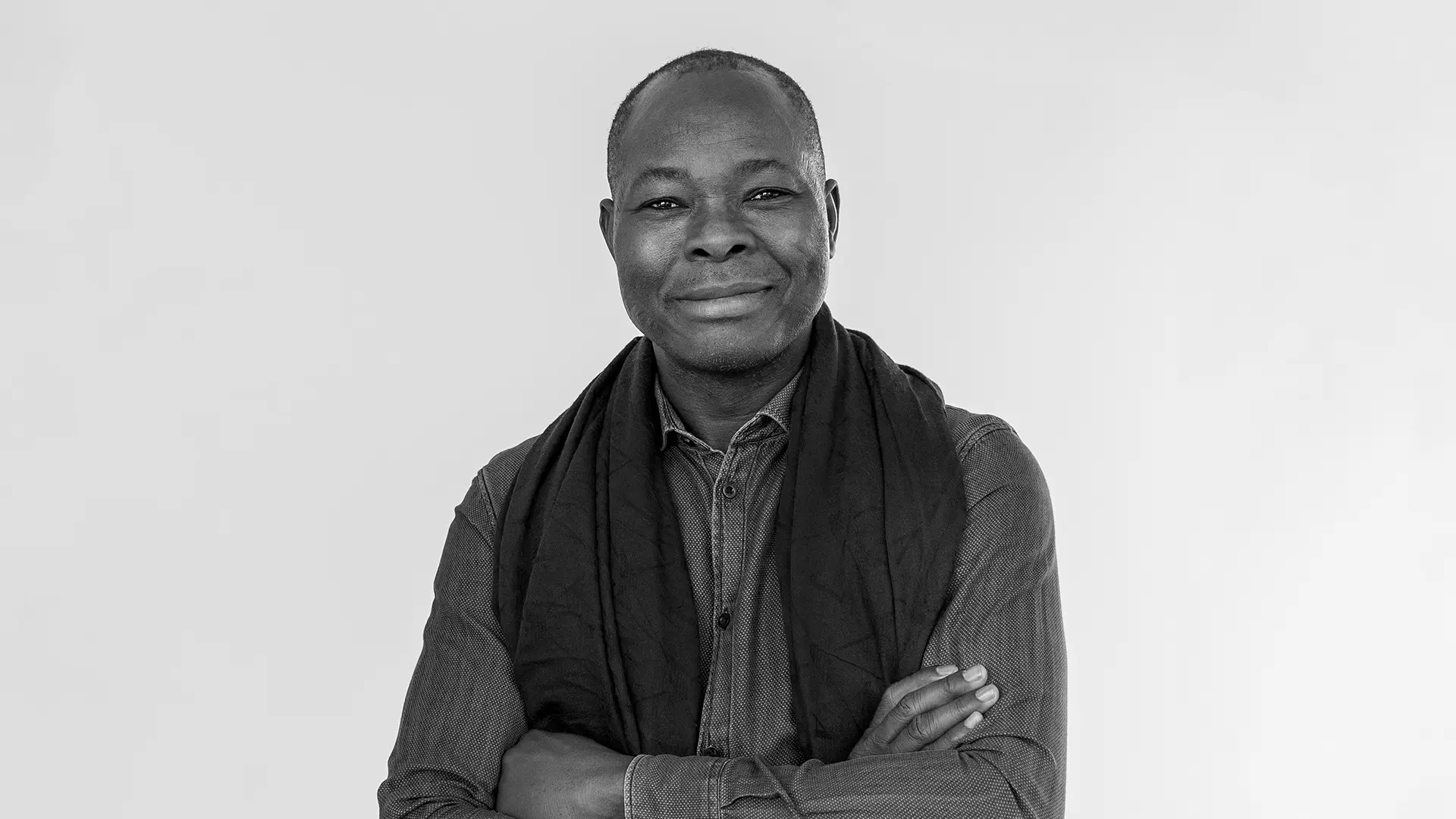
The internationally acclaimed architect Francis Kéré garnered critical praise from the beginning of his architectural practice when awarded the prestigious Aga Khan Award for Architecture (2004) for his first ever building - a primary school he designed, raised the funds for and realised in collaboration with the residents of his native Gando, Burkina Faso. In 2022, he became the first African architect to receive the Pritzker Architecture Prize. Kéré has gone on to become one of the most distinguished contemporary architects, thanks to his pioneering of a communal approach to design and his commitment to sustainable materials, as well as modes of construction. Inspired by a curiosity for the particularities of any given locality and its social tapestry, he has gathered a diverse, agile team at his Berlin-based Kéré Architecture offices, to take on projects across four continents. Most prominently these include his design for the Benin National Parliament (under construction), the Goethe Institute in Dakar (under construction), the Léo Surgical Clinic & Health Centre (2014), the Lycée Schorge Secondary School (2016), the Serpentine Pavilion (2017) and Xylem (2019), a gathering pavilion for the Tippet Rise Art Center.  Underpinning his architectural practice are his past and current teaching engagements at TU München, the Harvard Graduate School of Design, the Accademia di Architettura di Mendrisio, and Yale University as well as his participation in solo and group exhibitions including at the Venice Biennale of Architecture, the Museo ICO in Madrid, the Architekturmuseum in Munich, the MoMA in New York, the Royal Academy in London and the Philadelphia Museum of Art. 
Anniina Koivu
Anniina Koivu is a design writer, curator, consultant and teacher, who divides her time between Milan and Lausanne. She works across a number of fields, from curation to art direction, product development, and editorial and research projects, which she develops for clients such as Kvadrat, Iittala, Vitra, Camper and the Fogo Island Workshops and Shorefast Foundation. In autumn 2021, U-Joints – A taxonomy of connections, developed together with Andrea Caputo, will be published. The encyclopedic publication is the result of a three-year research project and exhibition series that look at human history through joints. U-JOINTS has been exhibited during the week of the Salone del Mobile.Milano 2018; A taxonomy of nails, screws, bolts, rivets and nuts was on show at elac/ECAL in 2019, the Adhesives and fusions chapter is open at the Gewerbemuseum Winterthur until January 2022. Her latest research and publication is Vico Magistretti: Stories of Objects (Triest/Ecal, 2020), the result of an investigation of the little-considered moment in the lifespan of design products when production stops, with a focus on the reasons that lead up to this end of the design object. She wrote the comprehensive monograph on Ronan and Erwan Bouroullec Works (Phaidon, 2011) and has edited and contributed to a number of publications such as Materialising Colour: Journeys with Giulio Ridolfo (Phaidon, 2020), Atlas of Furniture Design (Vitra Design Museum, 2019), Industrial Facility (Phaidon, 2018), Arita 2016/ (Phaidon, 2017), The Walking Society (Lars Müller Publishers, 2015) and Pierre Charpin’s Entre Les Vases (Birkhäuser, 2009), among others. Serving as editor-in-chief on Interwoven (Kvadrat, 2020), Anniina launched the first print issue of the (online) magazine on contemporary culture and independent criticism. Among her other curatorial works are Tehdas–Fabrik–Factory (Fiskars Village Art & Design Biennale, 2019), an exhibition exploring the diversity of contemporary design production, and Typologie: the wine bottle and the cork stopper (Milan, 2019). She has been a speaker, moderator and juror at international design competitions and events. She is Head of Master Theory at ECAL/ University of Art and Design Lausanne. 
Rem Koolhaas
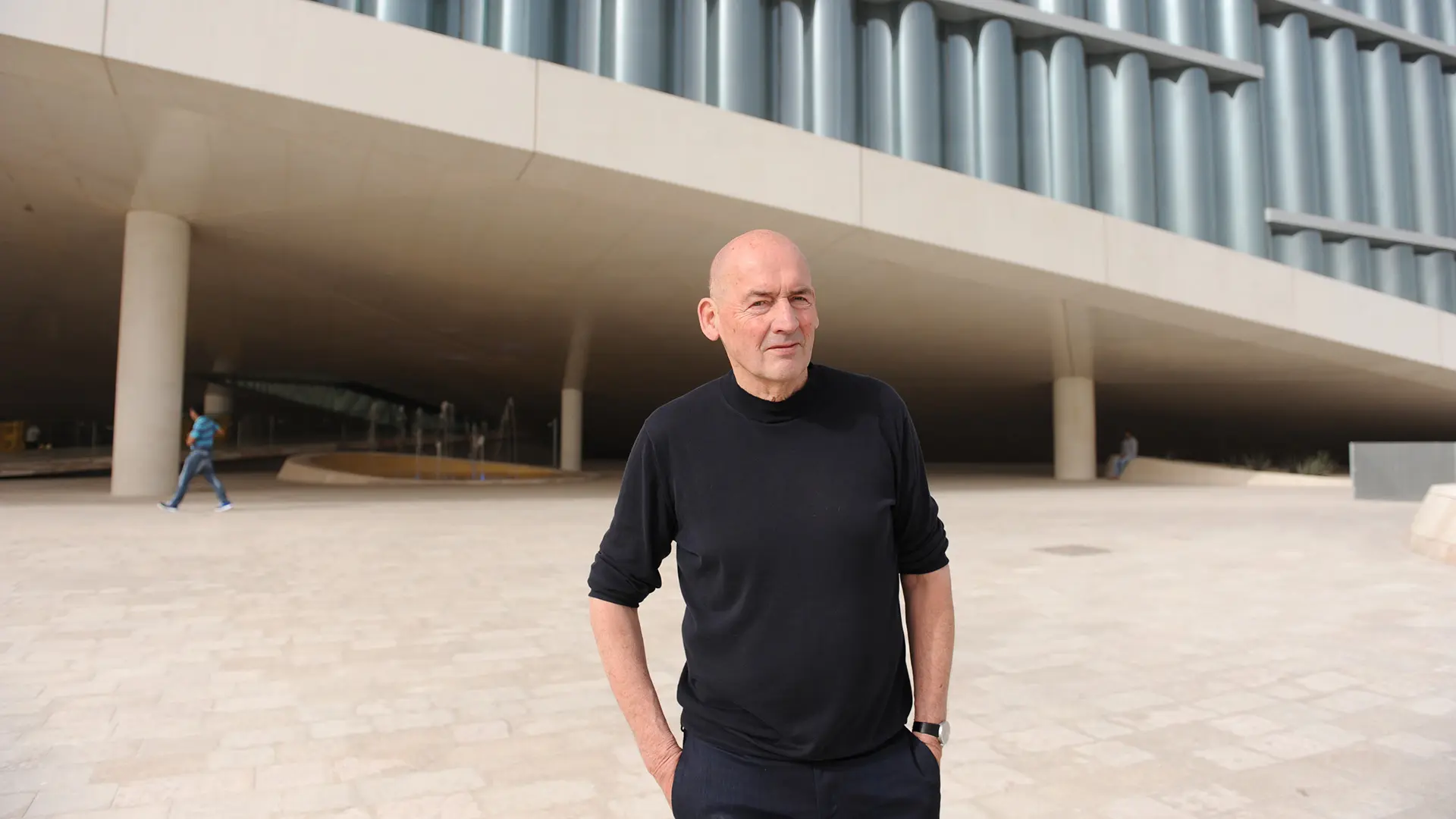
Rem Koolhaas (Rotterdam, 1944) founded OMA in 1975 together with Elia and Zoe Zenghelis and Madelon Vriesendorp. He graduated from the Architectural Association in London and in 1978 published Delirious New York: A Retroactive Manifesto for Manhattan. In 1995, his book S,M,L,XL summarized the work of OMA in "a novel about architecture". He co-heads the work of both OMA and AMO, the research branch of OMA, operating in areas beyond the realm of architecture. His built work includes the Austrian House (2023), Taipei Performing Arts Center (2022), Axel Springer Campus in Berlin (2020), the Qatar National Library and the Qatar Foundation Headquarters (2018), Fondation Galeries Lafayette in Paris (2018), Fondazione Prada in Milan (2015/2018), Garage Museum of Contemporary Art in Moscow (2015), the headquarters for China Central Television (CCTV) in Beijing (2012), Casa da Musica in Porto (2005), Seattle Central Library (2004), and the Netherlands Embassy in Berlin (2003). Koolhaas directed the 2014 Venice Architecture Biennale, is a professor at Harvard University, and curated Countryside: The Future (2020), an exhibition about the non-urban areas around the globe that opened in February 2020 at the Guggenheim Museum in New York.   Photo Credits: Charlie Koolhaas - courtesy of OMA
Gaia Lamperti
Gaia Lamperti is a multimedia journalist based in London covering art, design and technology through the lens of social inclusion and sustainable innovation. With a degree in Italian Literature from the University of Milan (2015-2018) and a Master’s degree in International Journalism from City, University of London (2019-2020), Gaia has worked with international media companies, online publications and non-profit organisation across news reporting, feature writing, podcasting and visual storytelling. Born in Milan, she has lived and worked in the US, Spain and Australia before settling in London where she has received in-company training at The Economist and was awarded with the Youth Fellowship by the International Monetary Fund in 2020. Gaia is also a fellow reporter at the Solution Journalism Network covering solution-driven stories about sustainable innovation. Her work has been published on Al Jazeera, Euronews, Domus, IBS Intelligence, DeSmog, SmartGreen Post and others.   Website LinkedIn Twitter Facebook Instagram  
Marianne Lardilleux
Marianne Lardilleux is a French architect who graduated from the École Nationale Supérieure d’Architecture in Versailles. After working in architecture studios, she started her retail design career at Louis Vuitton in 2010. Within the LVMH group, in 2012 she transitioned to Céline where, among other achievements, she spearheaded the implementation of the brand's new store design concept with the Mount Street flagship in London.  She joined Aesop and moved to New York in 2016 as Store Design Manager for the Americas. There, she rebuilt the regional store design team, overseeing the rapid expansion of the brand’s retail portfolio across the US and Canada, with an ever-increasing focus on customer experience and sustainability. In September 2020, she was appointed Head of Store Design at the global level, and appointed Director of Global Retail Design in 2023. Marianne is currently based in Paris, where she lives with her husband and two children.