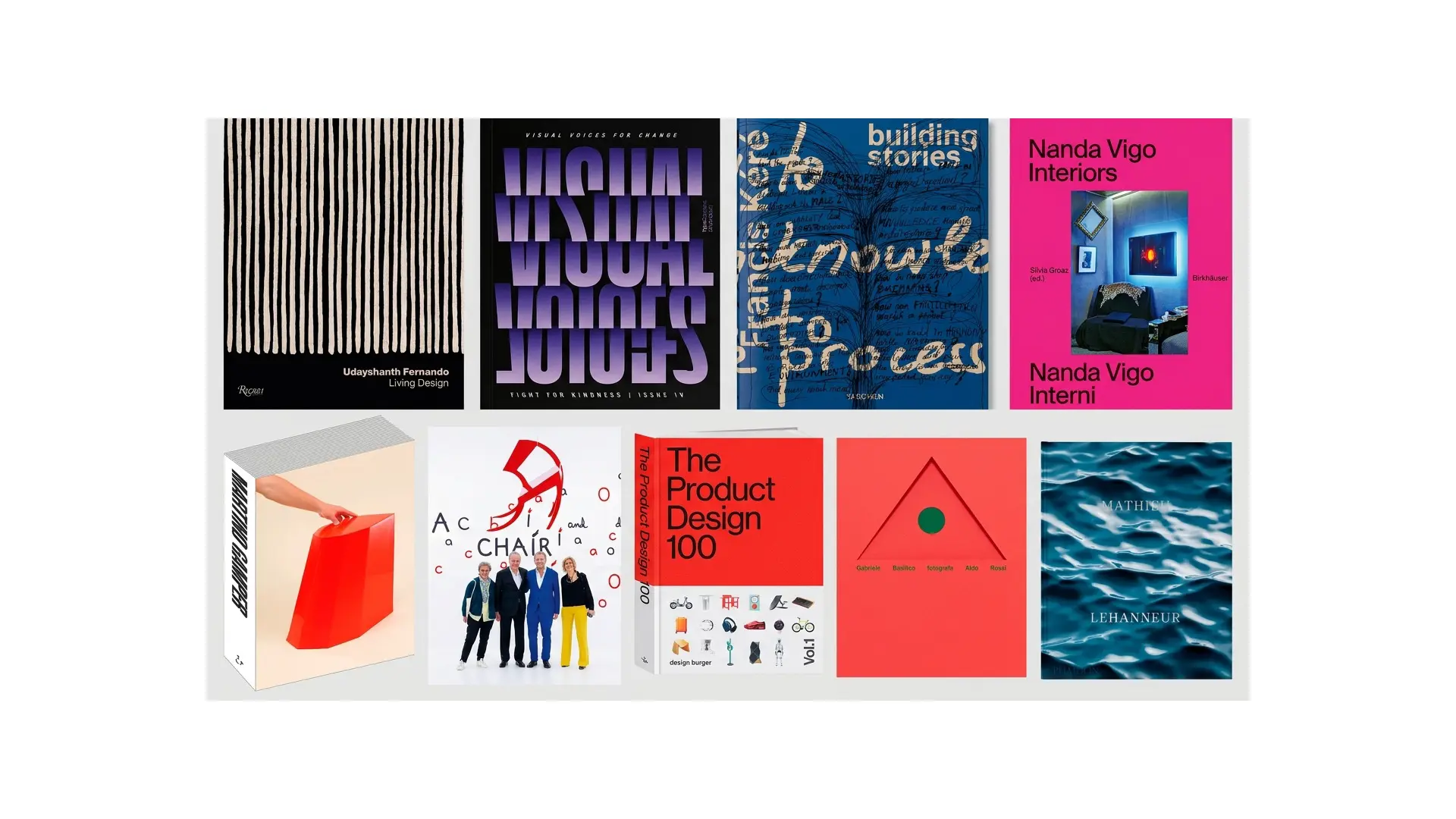





16 books between reality and imagination. To be explored as atlases of experience

book cover

Writings by Rem Koolhaas, chairs by Bob Wilson, photos by Gabriele Basilico, the story of Luceplan and Francis Kéré’s autobiography. Then hotels between socialism and luxury, graphics and super monographs

CONTRACT

Socialist Hotels, by Elena Amabili, introduction by Caroline Eden, Fuel Publishing, 2026
in inglese

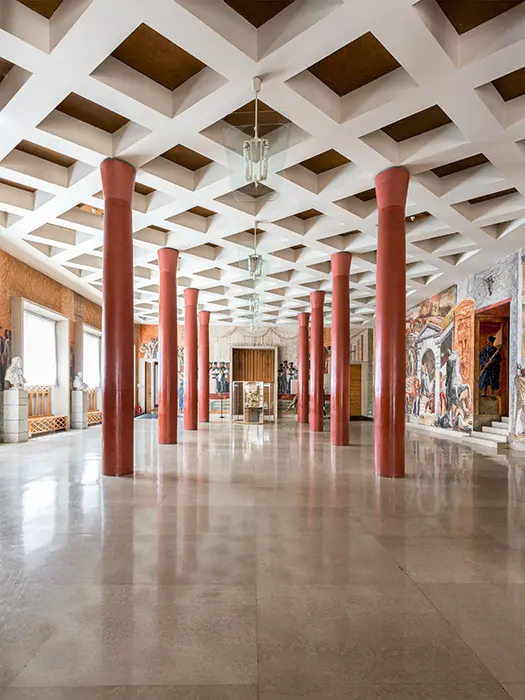
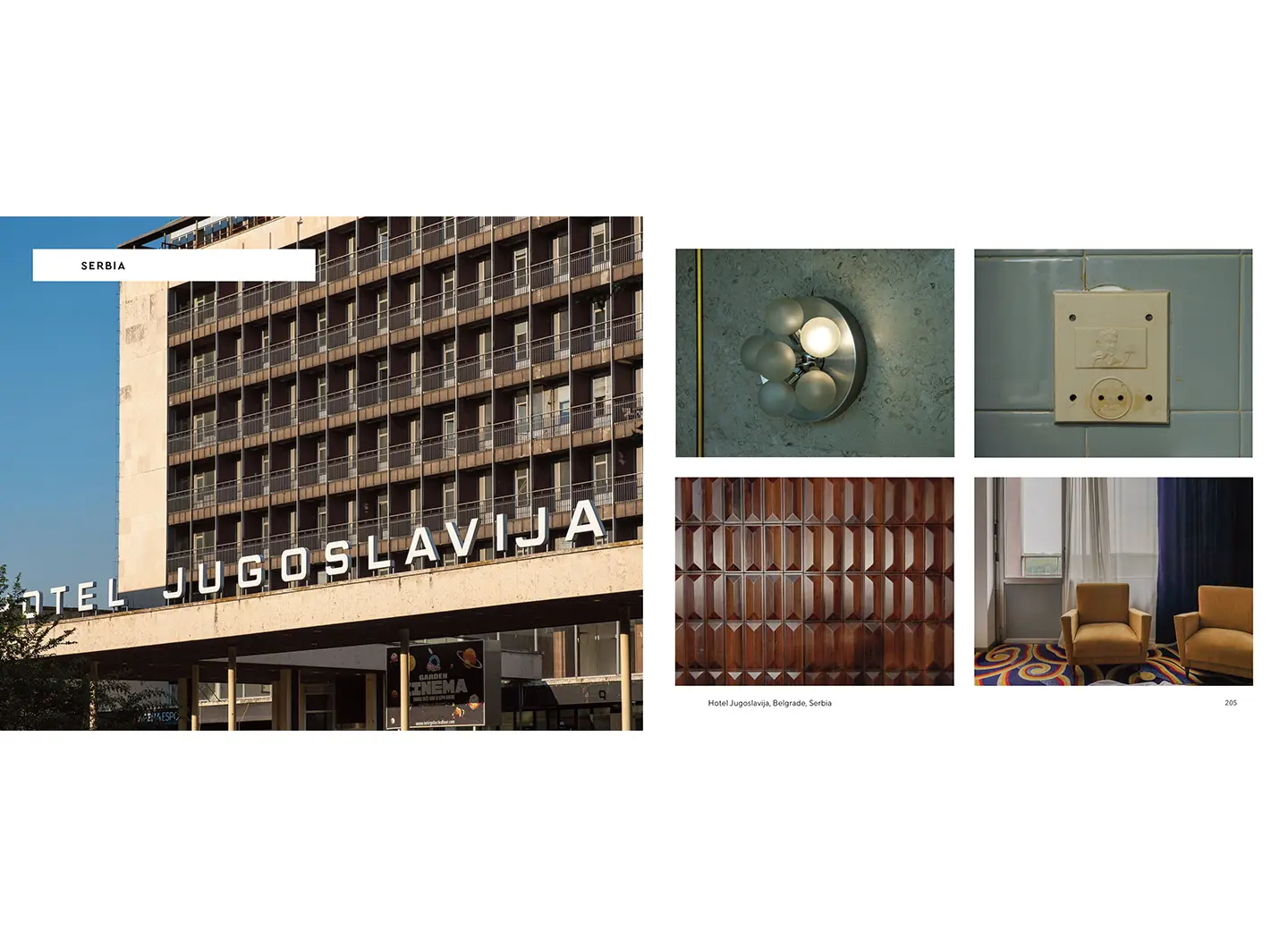
An atlas of forms, materials and imagery that tells the story of a surprising season of hospitality architecture. The book presents 153 hotels in 31 countries, built between Eastern Europe and the post-Soviet region, so composing an original photographic journey through radically different styles and visions. They range from the splendour of Socialist Realism and Stalinist neoclassicism to the severity of Soviet Modernism, all the way to the experimental, almost utopian architecture of the following years. Monumental or austere, sometimes visionary, these structures surprise by their use of concrete, mosaics, stained glass windows and ornament, interweaving experimental designs with local traditions. Buildings and interiors dialogue in total projects, devised to shape a collective experience: holiday accommodation and showcases, places of meeting and control, where architecture becomes a mirror of a precise social model. The photographs depict their daily lives, beyond the interpretation of socialist architecture as a simple ideological manifesto, and reveal a little-explored heritage of bold solutions and plural identities, threatened by dereliction, conversion and demolition. The volume documents their fragile survival, saving from oblivion not only singular buildings, but a piece of European cultural memory.
G01-Socialist-Hotels

CONTRACT

Explore. The Leading Hotels of the World, by Spencer Bailey, The Monacelli Press, 2026
in English

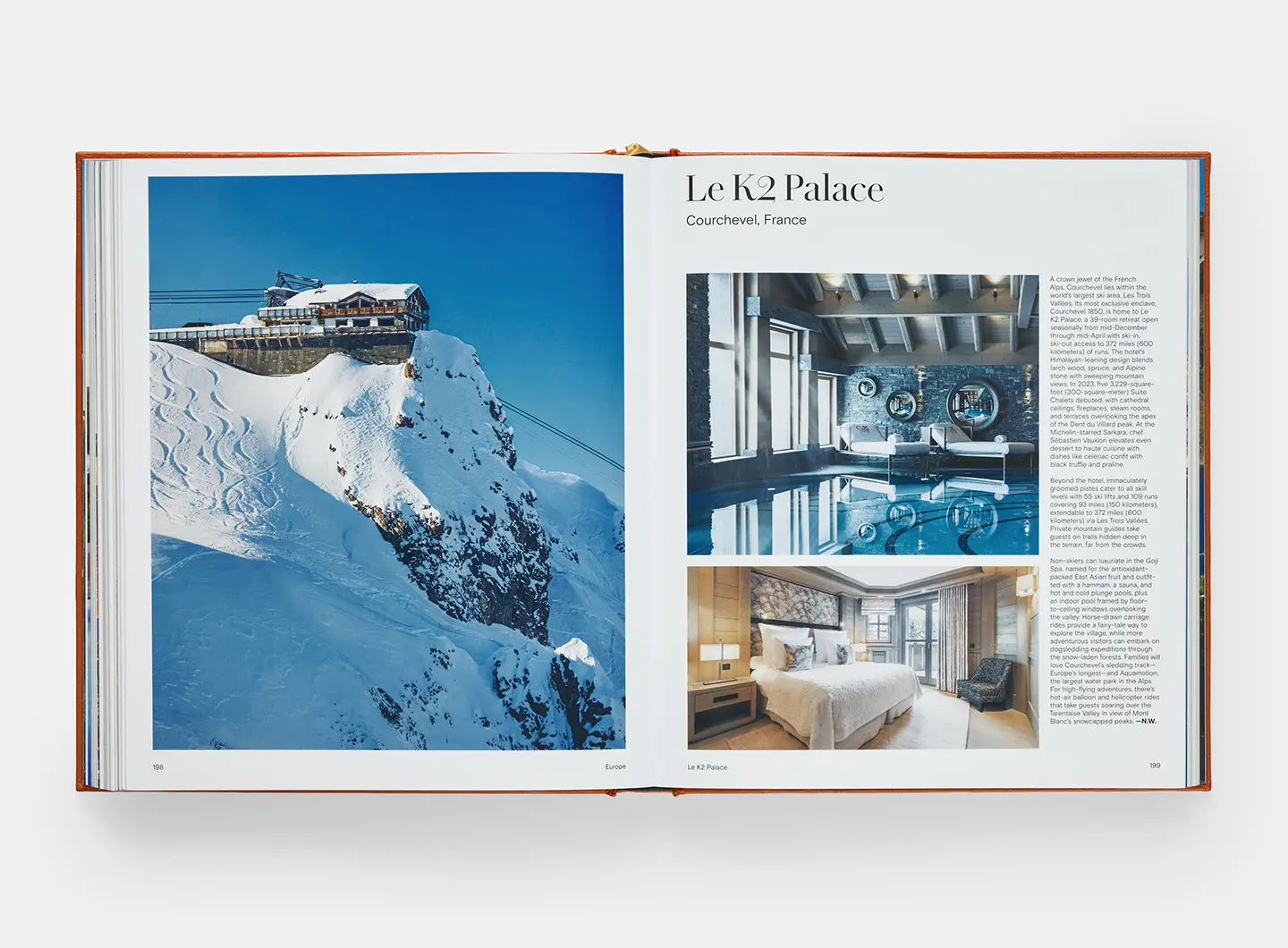
Exploring: what does it mean today? Not necessarily going to remote places or uncharted lands, but learning to look at travel as an experience capable of changing our relationship with space, nature and time to achieve an equilibrium between body, mind and landscape. This is the leitmotif of the volume, the third chapter in the series devoted to the universe of The Leading Hotels of the World, the largest international consortium of independent luxury hotels founded in 1928.
More than 80 hotels, chosen from over 425 in the international collection, become opportunities to observe how contemporary hospitality interprets the landscape and builds experiences. From architecture surrounded by nature to facilities devoted to wellness, from outdoor sports to the most contemplative rituals, luxury is recounted through a geography that connects nature, culture and self-care and the possibility of experiencing a place intensely. The editorial project alternates reports, images and stories told by journalists and travel writers, with insights dedicated to emblematic destinations and itineraries that invite travellers to extend their experience beyond the hotel. A coffee-table book evoking a contemporary idea of hospitality.
G02-EXPLORE-Hotels

DESIGN

The Product Design 100, Design Burger, 2026
in English

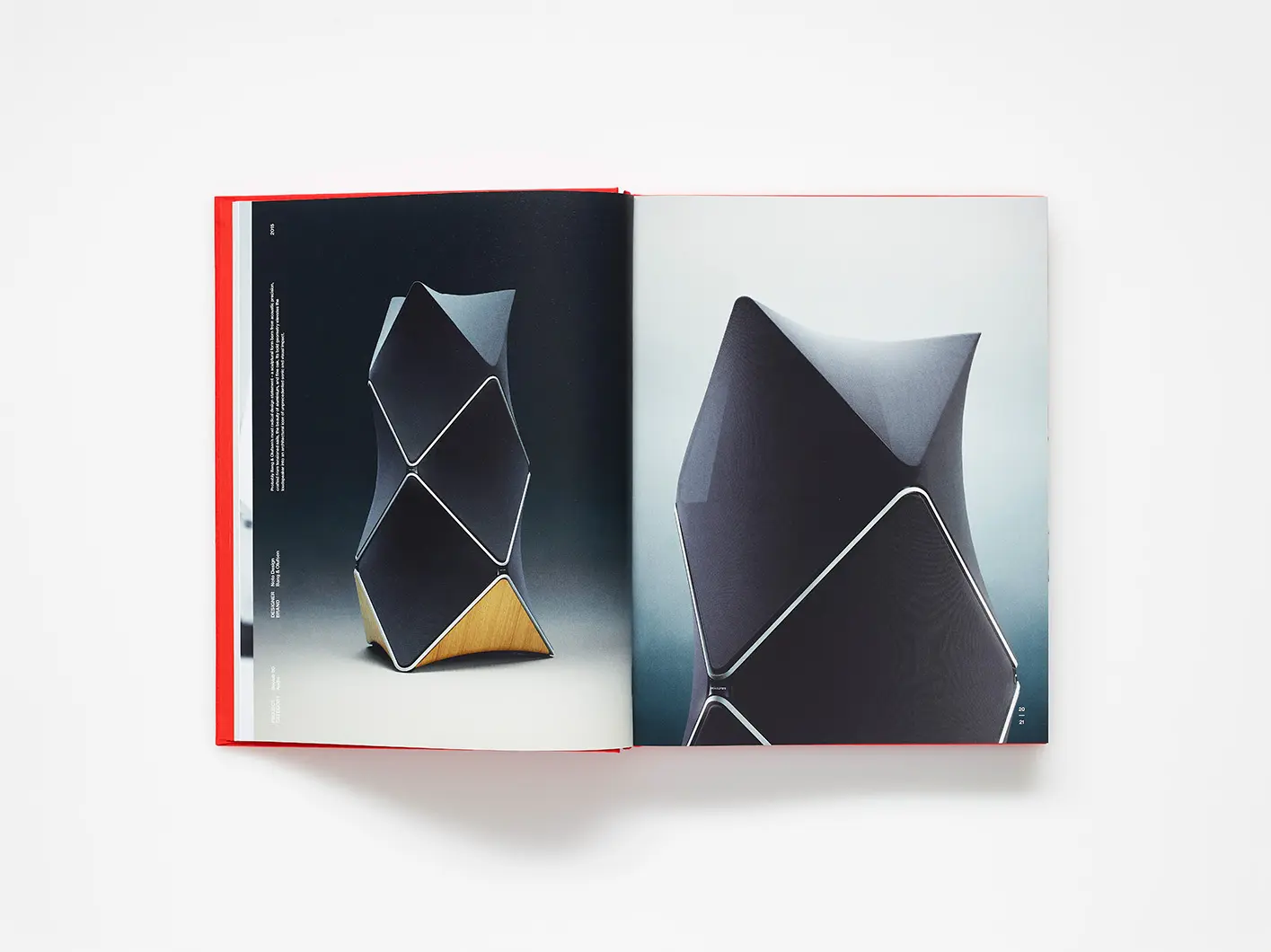
This is the first book from Design Burger, an independent platform created in 2018 that has become an international community of over 250,000 people through daily publications, interviews, studio visits, exhibitions and international events. A hundred projects have been chosen — from technology to furnishings, lighting, homeware and mobility — to photograph the state of contemporary industrial design, but above all remove it from the digital flow. So the projects have been selected not for their aesthetic values or trendiness, but clarity of purpose, quality and relevance in the broader debate on design, consciously set beside products designed by figures such as Jasper Morrison, Naoto Fukasawa and Marc Newson. This creates space for independent studios and emerging designers to express the complexity of the current scene. In addition to the visual repertoire, contributions by influential voices such as Benjamin A. Pardo, Maria Cristina Didero and Raw Edges place the objects in a broader cultural, industrial and social context. An atlas of the present, presented at Shoreditch Design Week 2026 with an exhibition-physical extension of the book.
G03-The-Product-Design

MONOGRAPHS

Martino Gamper, di Marco Sammicheli, Electa, 2026
in Italian and English

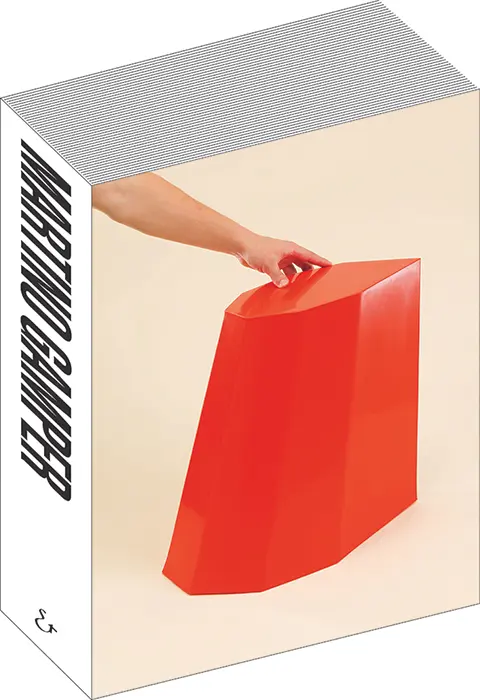
This volume marks the start of the new Electa series edited by Marco Sammicheli, dedicated to leading figures in European design and Italian designers of international importance who still lack a reference monograph. The series is notable for its handy but carefully documented format and the editorial design by Studio Pupilla, featuring a dual flap cover with detachable postcards and a strong graphic identity. The volume offers a critical reading of Gamper’s work, reconstructing his training, design method and relationship with the history of design. A path marked by his South Tyrolean craft heritage, studies in Vienna and Milan and his experience in London at the Royal College of Art, placing his work in the panorama of contemporary design. The profile of a designer capable of entwining memory, experimentation and design culture, giving readers an effective key to understanding his contribution to design history.
G04-cover-Gamper-2

MONOGRAPHS

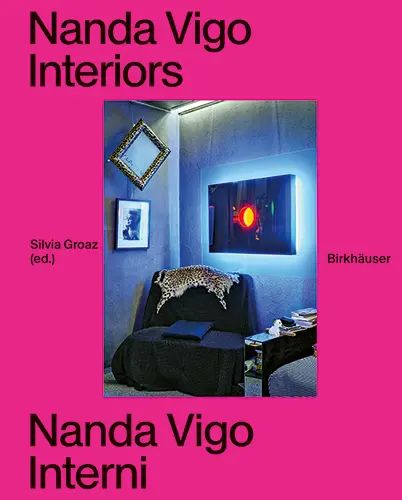
Nanda Vigo Interiors / Nanda Vigo e gli interni, di Silvia Groaz, Birkhäuser, 2026 
in English and Italian

Subtitled The Metaphysics of Everyday Life, with 496 pages and 356 illustrations, the monograph explores coherently for the first time the artist’s research in the field of architecture: interiors, home workshops, places of worship, set designs, installations, exhibition stands and experimental environments. Through more than fifty years’ work, the volume presents a figure — one of the few women in the circuits of the artistic and architectural avant-garde — capable of questioning and crossing the boundaries between art, design and architecture, focusing on the psycho-sensory dimensions of space and the relationship between body, matter, light and environment. The research, conducted through archival documents, magazines, historical and contemporary photographs, drawings and personal accounts by craftworkers, colleagues and inhabitants of her houses, also reconstructs the cultural context in which Vigo worked, including the avant-gardes, kinetic art, radical design and pop culture. Divided into three sections — Constellations, Context, Ephemera — the book retraces her complete oeuvre, in which interiors are not simple spaces to be inhabited, but a perceptual and transformative experience, capable of dissolving the boundaries between everyday life and the visionary dimension.

G05-nanda

AUTOBIOGRAPHY 

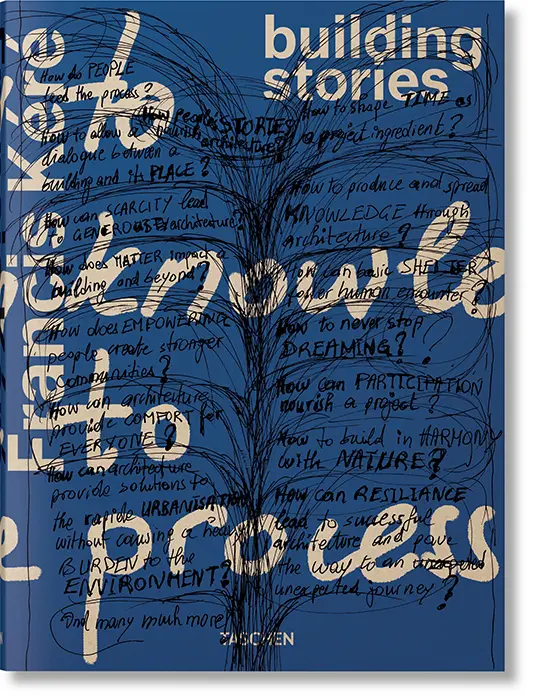
Francis Kéré. Building Stories, Taschen, 2026
in English

“Many labels have been attached to my work. Radically simple. Practical aesthetics. Primary elements. Bridging the gap. Learning from vernacular architecture. Building with people and for people. Achieving more with less. And I could go on.” These are the opening words of the autobiography of the 2022 Pritzker Prize winner, who declares himself open to anything so long as his work has a positive impact on the communities in which it is embedded. In other words, being an architect means doing good. Socially committed, Kéré lays himself bare in these 444 pages, not hiding the fears, mistakes, efforts and passions that have led him to the place he has now reached and where each work tells us something: “the stories of buildings and the building of stories”. Two concluding essays, respectively by Lesley Lokko, who took part in the inauguration of the monument to the young revolutionary Thomas Sankara, and by Juhani Pallasmaa, a Finnish architect who mentored him, broaden our understanding of his work, setting it in a perspective that entwines the ethical dimension with culture and architecture.

G06-KERE.-V2

MONOGRAPHS

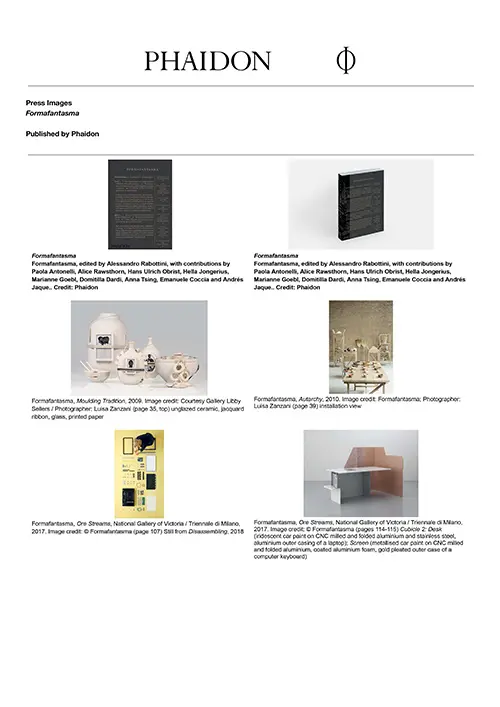
Formafantasma, edited by Alessandro Rabottini and Formafantasma, Phaidon, 2026
with contributions by Paola Antonelli, Alice Rawsthorn, Hans Ulrich Obrist, Hella Jongerius, Marianne Goebl, Domitilla Dardi, Anna Tsing, Emanuele Coccia and Andrés Jaque 
in English

A monograph — the first devoted to the studio, founded in 2009 by Andrea Trimarchi and Simone Farresin — that seeks to tell how it developed its thinking about design. In 352 pages and 400 illustrations, it retraces the more than fifteen years of Formafantasma’s achievement, comprising objects, exhibitions and commissions, the volume presents a map of ideas, experiments and questions in which the works, chronologically ordered, are presented not as isolated entities, but as nodes in a changing network. In this way the early experiments of Autarchy and Botanica all the way to Ore Streams, Cambio and Prada Frames become stages in a progress that shifts design from the object to the systems that produce it, questioning their responsibilities, materials and consequences. Designing means investigating, questioning established models, making visible the consequences of our choices. The images, case studies and conversations with leading figures on the international scene depict a constantly evolving path, in which the project also becomes a medium for interpreting the present and imagining possible transformations. The volume, like Formafantasma’s practice, invites us to think before designing and to consider the project as a critical instrument.

G07-Formafantasma

PHOTOGRAPHY

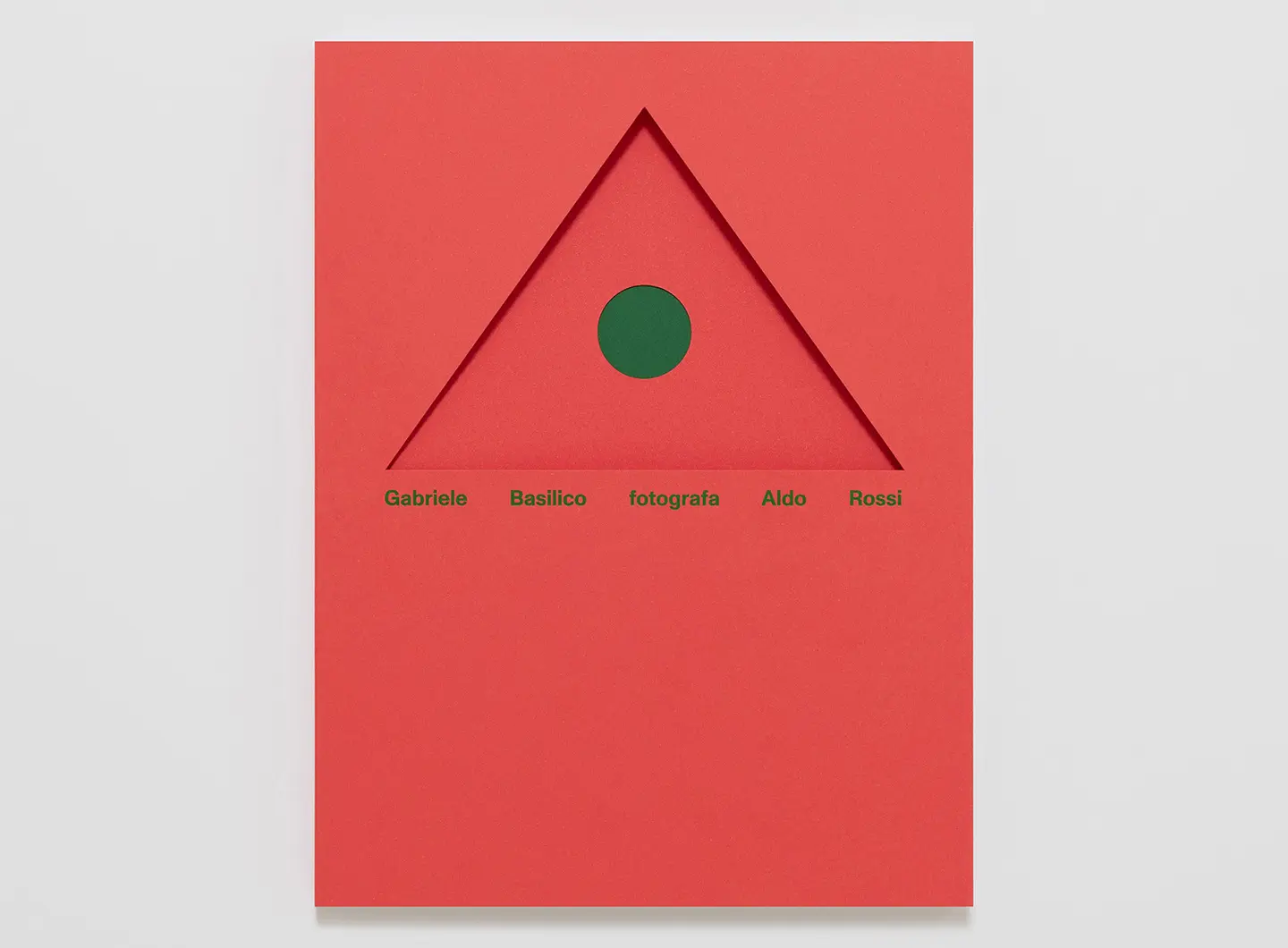
Gabriele Basilico fotografa Aldo Rossi, texts by Gabriele Basilico, Aldo Rossi, Chiara Spangaro, Pier Paolo Tamburelli, Humboldt Books, 2026
in Italian and English

More than a photography book, this is a dialogue between two ways of interpreting the city: photographing it and building it. Brought together for the first time, the images that Basilico has dedicated, over a period of almost twenty years, to the architecture designed by the 1990 Pritzker Prize winner, recreate the depth of the affinity between the two in the name of their shared Milanese background and training at the Politecnico di Milano. The 72 b&w photos, far from being simple documentation, observe the buildings in their relationship with the city without the least embellishment or correction. And it is precisely this absence of rhetoric that reveals the strength of Aldo Rossi’s architecture, suspended between memory, geometry and everyday life. The portrait is composed of a Milan observed through two different, but surprisingly harmonious sensibilities: that of the architect, who builds the memory of the city, and that of the photographer, who records its enduring presence and changes. An encounter that the book not only celebrates, but expresses through the images and words of its protagonists. An added value are the entries on the projects written by Rossi himself and the texts that the two central figures in Italian culture in the second half of the twentieth century devoted to each other.

G08-BASILICO

GRAPHIC DESIGN 

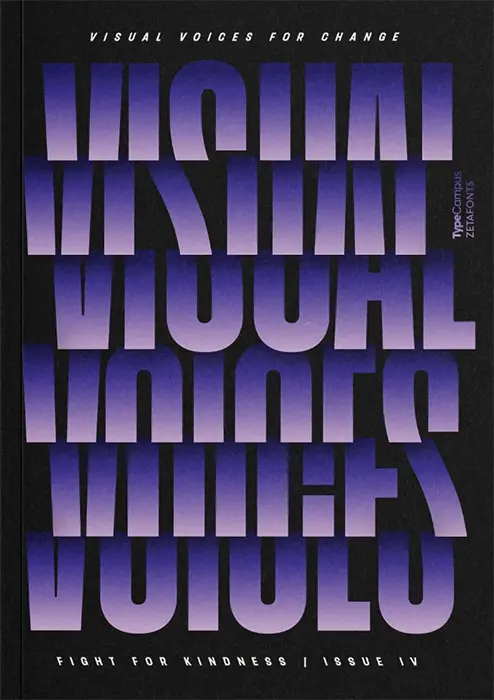
Visual Voices for Change. Global typographic posters to Fight for Kindness, project by TypeCampus & Zetafonts, Debora Manetti and Shrishti Vajpai, Lazy Dogs, 2026
in English

Can typography help make the world kinder? This question prompted this volume presenting the fourth edition of Fight for Kindness, an international project promoted by TypeCampus and supported by the Florentine type foundry Zetafonts. Over 600 typographic posters, created by designers from all continents and presented at more than 20 exhibitions worldwide, make up a visual atlas featuring kindness as a universal value. More than a catalogue, the book is a reflection on the role of visual communication in contemporary society: through 34 alphabets and languages, interviews, essays and original contributions, it demonstrates how letters, words and images can overcome cultural and linguistic boundaries to generate dialogue, empathy and awareness. With a preface by Steven Heller and the participation of numerous leading designers on the international scene, the volume documents an idea of design understood not as an aesthetic exercise but a civil practice. An approach already recognized by the ADI: Fight for Kindness 2024 was selected in the ADI Design Index 2025 and, in 2026, entered the Compasso d’Oro Selection in the Communication Design — Social Campaign category.

g09-Visual-Voices_Cover

GRAPHICS 

Tutto in linea, by Saul Steinberg, Adelphi, 2026

Saul Steinberg’s line recounted the world, being capable of transforming the simplest gesture into a medium of observation, irony and thought with extreme lightness. Published for the first time in the United States in 1945, the book has (finally) reached Italy, more than eighty years after Aldo Buzzi, an architect friend of the author, pointed out its importance in Domus.
Born in Romania, trained as an architect in Milan Steinberg ended up in the United States because of the racial laws. He brought his experience in transit between cultures, languages and identities to drawing. But above all it is his graphic invention that makes the book a surprisingly contemporary work. Using just a few strokes, with a line that bends, stops, multiplies or becomes writing, the artist queries the boundary between reality and representation, between drawing and language. Reality is reduced to its fundamental signs, revealing the complexity of human behaviour, social conventions and identities. The world is dismantled and recomposed through the sign, revealing its contradictions and absurdities. His unforgettable lesson is to show that to see more, sometimes, one just needs to draw less.

G10-Steinberg_Tutto-in-linea

CATALOGUE

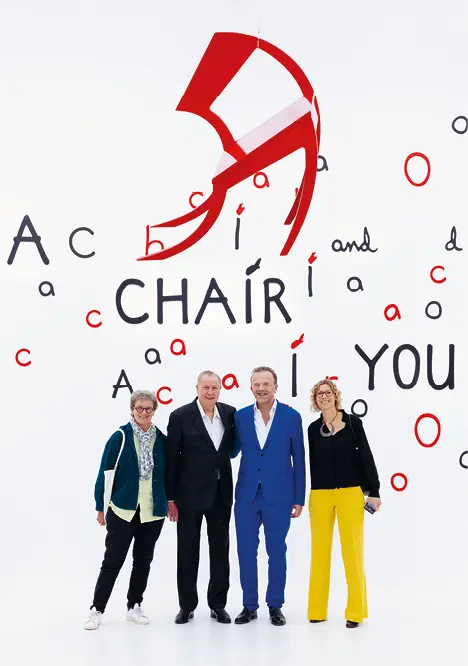
A Chair and You, edited by Zoé Barbier-Mueller, Lars Müller Publishers, 2026 
in English

A catalogue, but in reality a journey into the expressive potential of an everyday object which, freed from its function, lends itself to new narratives between art, design and theatre. A chair, in fact, is never just a chair. It can be sculpture, provocation, an exercise in imagination or a small manifesto of one’s time. This is the premise of the volume documenting the exhibition of the same name at the Kunsthal Rotterdam until 31 January 2027, formerly at the mudac in Lausanne and the Grassi Museum in Leipzig. The exhibition has grown out of the remarkable collection of the Swiss art patron Thierry Barbier-Mueller, and is transformed into spectacle by the direction of Robert Wilson, a master of visual experimentation, who turns chairs into sculptural presences, isolating them in a succession of settings, light effects and suspended atmospheres. The book presents this experience through photographic sequences that follow the rhythms of the exhibition, a work in four acts, which traverses the chair-universe in its most unpredictable forms: from functional object to sculpture, from ironic gesture to formal experimentation. The texts reconstruct the genesis of the project and give an account of the creative partnership between collector and director. What emerges is a reflection on the power of objects to transcend their function and acquire new meanings. Because, before Wilson’s gaze, even a chair can be staged and steal the scene.

G11_ACAY_Inhalt_72dpi

MONOGRAPHS

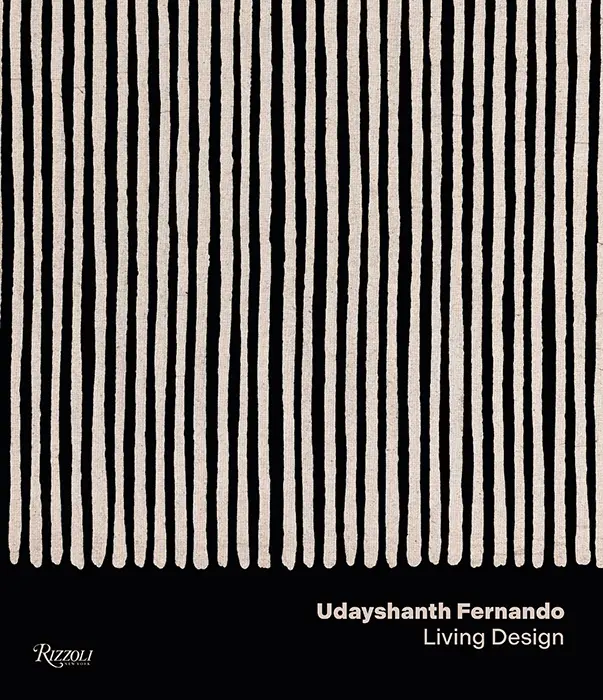
Udayshanth Fernando: Living Design, Rizzoli New York, 2026 
in English

A taste free from labels, capable of uniting ancient and contemporary, art and craftsmanship, memory and experimentation. This is the world of Udayshanth Fernando, known to all as Shanth, Sri Lankan designer and collector, founder of Paradise Road, a brand that brings together objects, interiors, hotels and restaurants. The first monograph dedicated to him tells the story of the construction of a personal aesthetic, matured in over forty years of research and closely bound up with the material culture of Sri Lanka. From his home, a treasure trove of art and artifacts, to hospitality spaces, each project reflects a vision in which nothing is purely decorative: objects, works and furnishings dialogue in layered compositions, with an atmosphere that is both sophisticated and informal. Far from the formulas of international design, Fernando draws on local tradition to reinvent it, collaborating with craftworkers on the island and transforming historical techniques and motifs into contemporary creations. An expression that does not chase fashions, but seeks a balance between beauty, function and comfort. Designing for Fernando means, in essence, transforming spaces and objects into authentic expressions of a culture and a personal history.

G12-Udayshanth-Fernando_cover

ARCHITECTURE

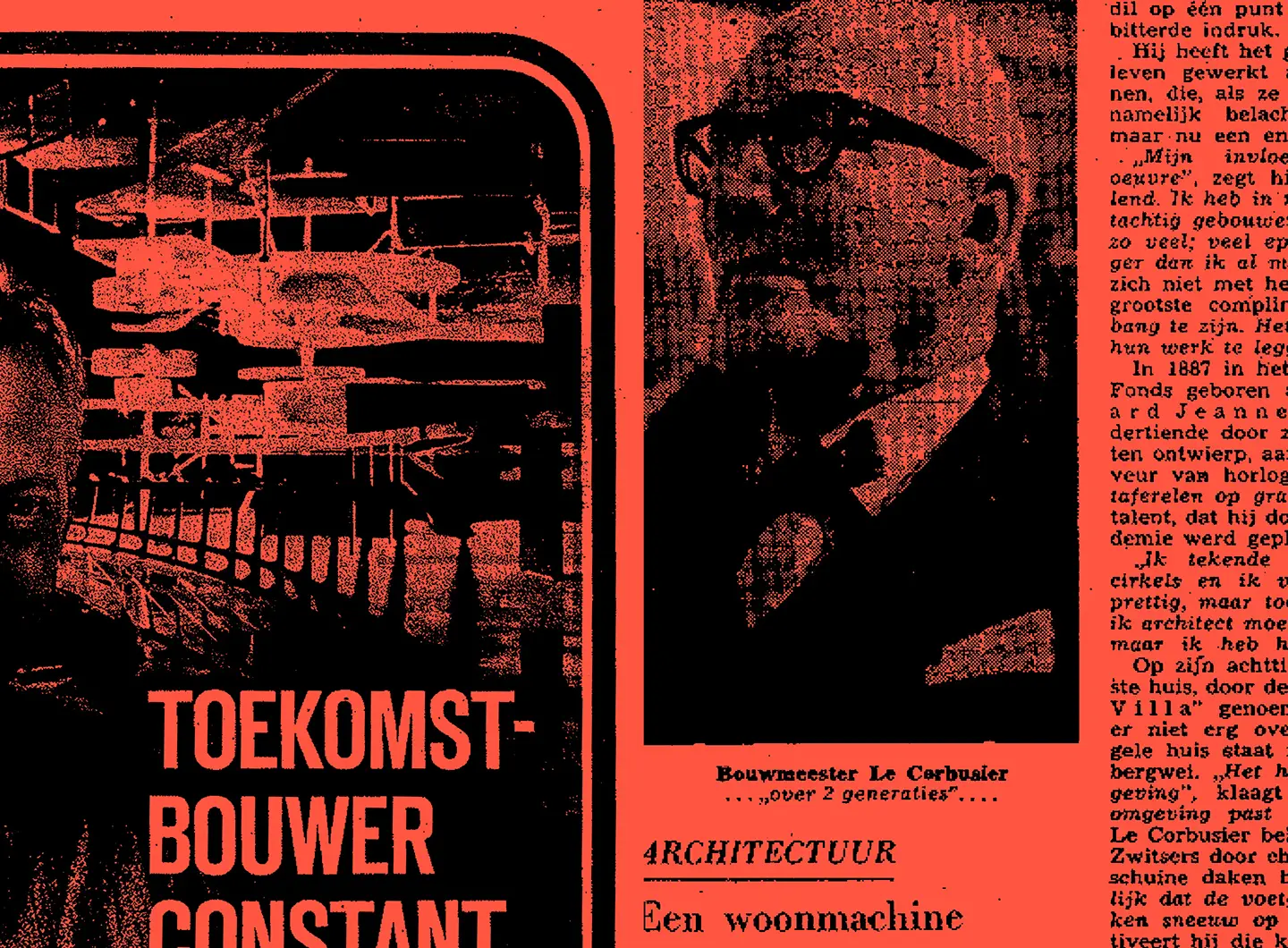
Rem Before Koolhaas. Journalism by an Architect, by Antonio Cantero, introduction by Beatriz Colomina, nai010 publishers + TU Delft OPEN Publishing, 2026
in English

What was there before OMA, Delirious New York, the architect capable of reading the city as a laboratory of contradictions? A curious and obstinate young journalist, already interested in understanding how people, systems and power work. The book brings to light for the first time this experience of Rem Koolhaas’s, gained between 1963 and 1967 in the pages of the Dutch weekly Haagse Post. In his early twenties, Koolhaas told of the celebrities, the Provos, the hippie counterculture and the transformations of Amsterdam. The interviews are much more than simple journalistic exercises: they become independent texts, almost essays in which voices, information and points of view are juxtaposed to bring out conflicts, power dynamics and social changes. Writing becomes a tool for observing, selecting and building connections. Cantero does not interpret Koolhaas’s journalism as a simple antechamber to architecture, but claims its independence through the original layouts of the Haagse Post, the English translations — hitherto unpublished — and a new interview. A laboratory in which a method takes shape: collecting, assembling, interpreting. Even before designing buildings, Koolhaas discovered reality as a design tool.

G13-Rem-Before-Koolhaas

MONOGRAPHS

Gio Ponti, by Oscar Duboÿ, Johan and Levi, 2026

Telling the story of this “creator with a thousand faces” and “prodigious handyman, overflowing with curiosity and imagination”, as the author describes him, means measuring oneself against a figure that is difficult to contain in a single definition. Architect, designer, ceramist, publisher and cultural promoter, in over sixty years Ponti spanned disciplines and styles, creating one of the most recognizable ideas of Italian modernity. It is this multifaceted nature that Duboÿ addresses in a slender volume, capable of synthesizing his immense output — represented by a rich iconographic apparatus — without reducing it to a simple chronological succession of works. From his beginnings at Richard-Ginori to the artistic direction of FontanaArte, from interiors to furnishings to great architecture, the unifying thread is Ponti’s ability to move between scales, materials and sectors of production while maintaining a unified vision, based on the search for beauty. In this perspective, Domus acquires a particular importance, not only an important stage in his career, but an instrument through which he contributed to building and spreading a culture of Italian design open to international comparison. A reading that restores relevance to an idea of modernity understood not as style, but as an incessant exercise in invention.

13-PONTI

MONOGRAPHS

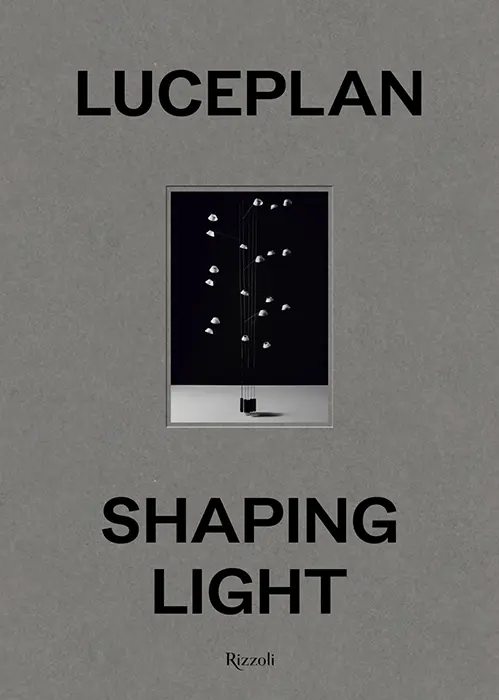
Luceplan. Shaping Light,edited by Valentina Croci, graphic design by Studio Blanco, Rizzoli illustrati, 2026
in English and Italian

Giving shape to light — the leitmotif of this first monograph dedicated to over forty years of research by the Milan-based company with an international scope — means transforming the way space is perceived and inhabited. Luceplan’s story is not just about the product, but about everything that usually remains behind the scenes: ideas, people, values and choices. Design insights, technological experimentation, aesthetic research and new visions of living are conveyed through archival images, previously unpublished photographs and critical essays, recreating the vitality of an achievement that has made lighting a field of research far beyond function, in a subtle balance between technology and poetry. 
From the Costanza lamp, an icon of restraint and intelligent design, to the most recent explorations of electronics, materials and sustainability, a design culture capable of combining innovation and everyday use emerges. The contributions of Chiara Alessi, Charlotte and Peter Fiell, Marinella Patetta, Laura Rysman and Sarah Robinson open up further vistas, bringing together design, neuroscience, sensory perception and environmental responsibility. More than a celebration, the book is a self-analysis and a reflection on the culture of design and the role of light, an immaterial material that designs atmospheres, generates emotions and imagines better ways of living.

14-Cover-Luceplan-Shaping

MONOGRAPHS

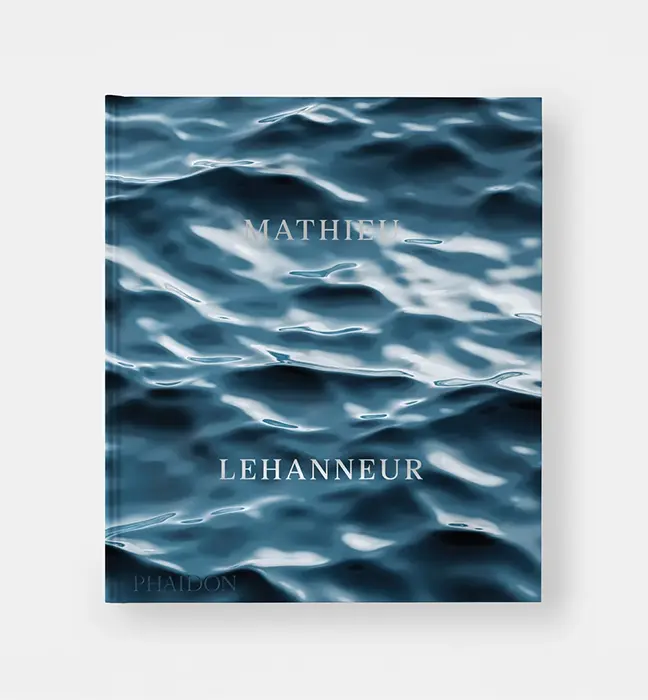
Mathieu Lehanneur, introduction by Spencer Bailey, texts by di Anne Bony, Constance Rubini, and Lucie Weegery, Phaidon, 2026
in English

This is the first monograph devoted to Mathieu Lehanneur, a French designer born in 1974, capable of traversing design disciplines and different scales with a visionary approach. Art, science and nature are the borderlands in which he works and sources of inspiration for the 80 projects brought together in the volume, divided into ten themed chapters. From the outset, biology, demographic data and the behaviour of elements such as water and stone have driven his research ranging from furnishings to interiors, technological devices and major public projects. Natural phenomena and scientific processes become tools for imagining new solutions: from air purification systems to plant aquariums, landscape installations and the torch and cauldron of the Paris 2024 Olympic and Paralympic Games. The numerous illustrations record a development that transforms intuition into form, revealing the creative process of each project. The volume is completed by an introductory essay, an interview with the designer and a study in depth of the Olympic project. A monograph-journey into the creative workshop of one who uses design to explore the relations between people, technology and the environment, pursuing an almost magical quality: the ability of objects and spaces to exert an influence on people and ultimately transform them.

mathieu-lehanneur-copertina
28 October 2026
Tags
See Also
Other Articles